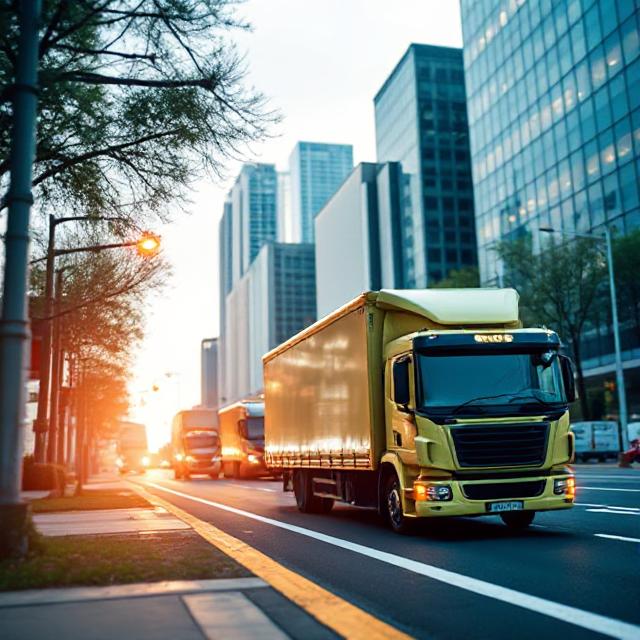
Explore how technology is revolutionizing urban freight transportation. Learn how AI, IoT, automation, and data analytics optimize logistics, reduce congestion, and boost sustainability.
The Role of Technology in Transforming Urban Freight Transportation
Urban freight transportation has never been more critical — or more challenging. Growing e-commerce, limited city infrastructure, congestion, and sustainability demands are forcing logistics providers and city planners to rethink how goods move through urban environments.
Technology is at the heart of this transformation. From real-time tracking to artificial intelligence, today’s tech solutions are optimizing delivery routes, reducing emissions, and making urban freight smarter and more efficient.
Let’s explore how technology is reshaping urban freight transportation.
1️⃣ Real-Time Tracking and Visibility
GPS tracking, telematics, and IoT sensors have made real-time freight visibility possible. Businesses and customers can now track shipments live, while fleet managers can monitor vehicle performance, location, and condition.
Benefits:
- Enhanced delivery accuracy.
- Immediate response to delays or disruptions.
- Improved customer satisfaction.
- Better fleet utilization and maintenance.
2️⃣ Artificial Intelligence (AI) for Route Optimization
AI-powered algorithms analyze massive data sets — including traffic patterns, weather, delivery windows, and road conditions — to calculate the most efficient delivery routes.
AI Optimization Leads To:
- Reduced fuel consumption.
- Shorter delivery times.
- Lower operational costs.
- Less urban congestion.
3️⃣ Internet of Things (IoT) for Smart Freight Management
IoT devices embedded in vehicles, containers, and warehouses create connected freight systems that gather and share critical data in real-time.
IoT Applications Include:
- Cargo condition monitoring (temperature, vibration, security).
- Predictive maintenance for vehicles.
- Smart warehouse inventory management.
- Remote diagnostics and alerts.
4️⃣ Automation and Autonomous Delivery
Autonomous technologies are beginning to make urban freight more efficient through self-driving delivery vehicles, drones, and automated warehouses.
Automation Innovations:
- Autonomous delivery robots for last-mile logistics.
- Self-driving trucks for highway freight.
- Robotic sorting and picking in warehouses.
- Drone deliveries in pilot programs.
5️⃣ Smart Traffic Management Systems
Cities are adopting smart traffic control systems that integrate freight data, AI, and real-time analytics to ease congestion and prioritize delivery vehicles when necessary.
Traffic Tech Features:
- Adaptive traffic lights.
- Freight-prioritized signal systems.
- Dynamic rerouting based on live congestion data.
6️⃣ Data-Driven Urban Freight Planning
Big data allows city planners and logistics companies to analyze freight movement trends, congestion hotspots, and delivery bottlenecks for better infrastructure and policy decisions.
Data Insights Support:
- Infrastructure investments (dedicated freight lanes, loading zones).
- Urban consolidation center placement.
- Freight policy adjustments based on real-world traffic patterns.
7️⃣ Electric and Sustainable Freight Solutions
Technology enables the deployment of electric vehicles (EVs), hybrid trucks, and hydrogen-powered freight vehicles that significantly reduce emissions in dense urban areas.
Sustainability Benefits:
- Zero-emission urban delivery.
- Lower noise pollution.
- Eligibility for green incentives and regulatory compliance.
8️⃣ Digital Platforms and Collaboration Tools
Modern digital freight platforms connect shippers, carriers, city planners, and logistics providers for better coordination and resource sharing.
Collaboration Tech Enables:
- Freight pooling and shared delivery models.
- Real-time communication between stakeholders.
- Transparent data sharing for smarter decision-making.
Conclusion
Technology is not just improving urban freight transportation — it’s redefining it. With the power of AI, IoT, automation, and real-time data, cities and businesses are solving age-old problems like congestion, pollution, and delivery inefficiency.
As these technologies continue to evolve, the future of urban freight looks increasingly smarter, cleaner, faster, and more sustainable.
Keywords:
urban freight technology, smart logistics, freight transportation innovation, AI in logistics, IoT freight management, urban freight automation, last-mile delivery tech, real-time tracking, smart cities, urban logistics transformation
Category:
Urban Logistics & Transportation Technology
